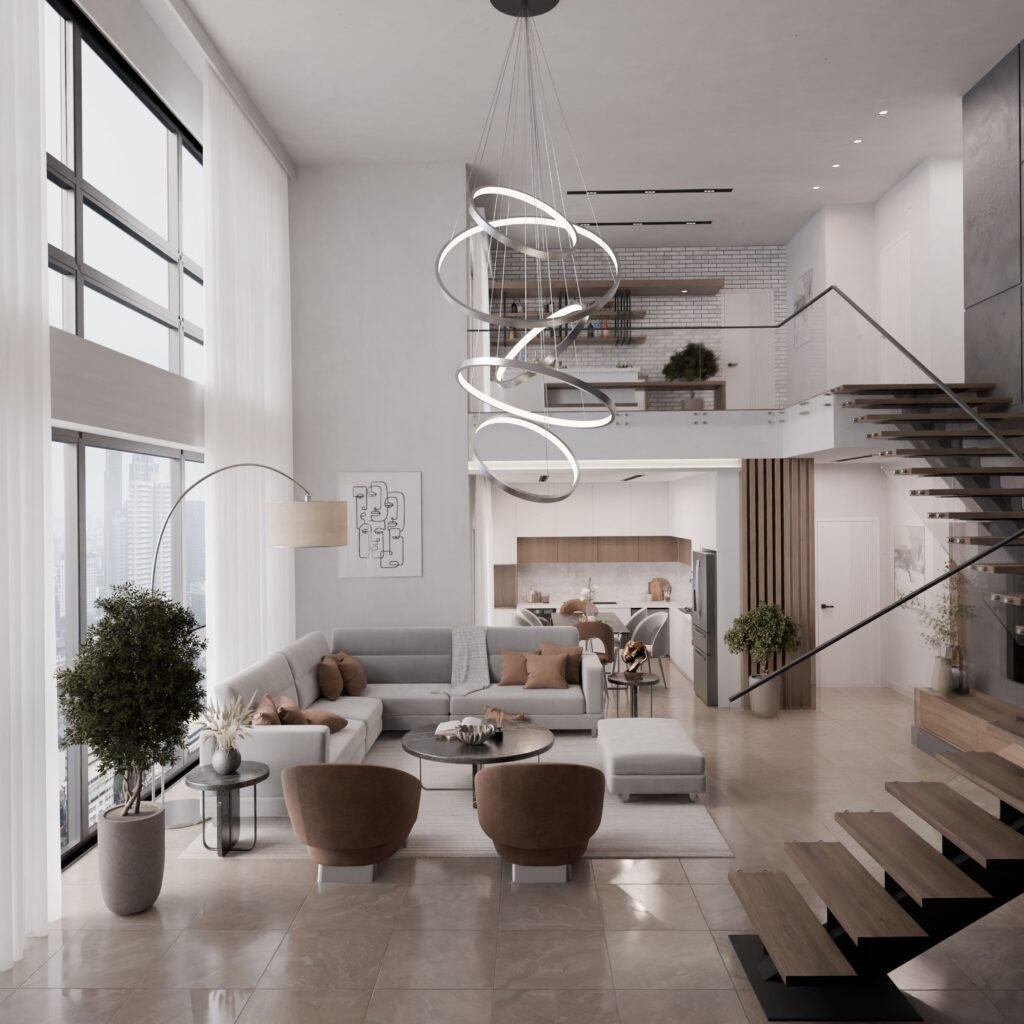
.png)
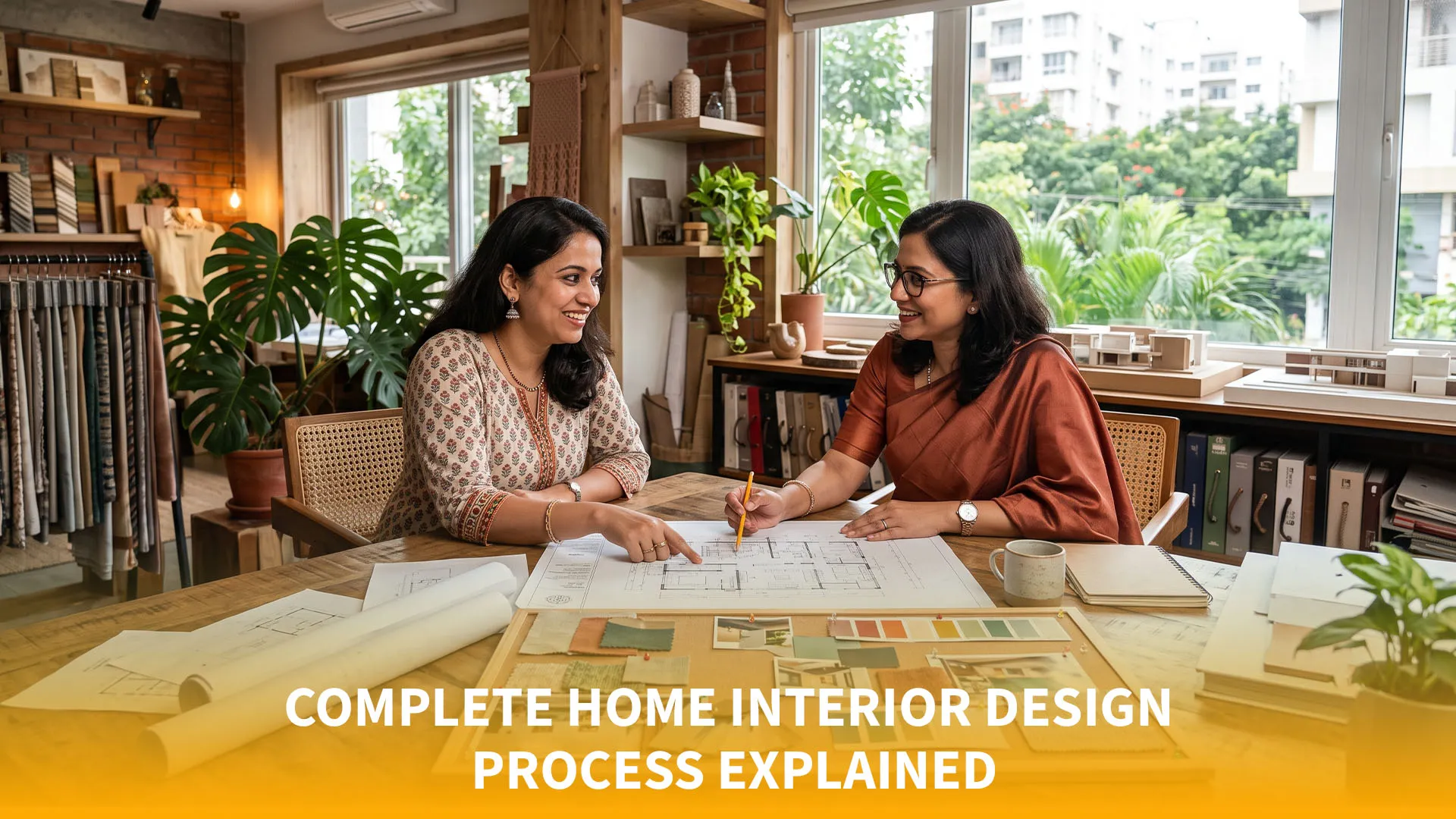
Introduction
Have you ever wondered what happens after you decide to design your dream home? Do you feel overwhelmed by choosing layouts, materials, colors, and furniture? Are you unsure how professional interior designers transform an empty space into a home that reflects your personality?
If these questions sound familiar, you’re in the right place. Understanding the Home Interior Design Process helps you plan your project with confidence while avoiding costly mistakes. Whether you’re designing a new home or renovating an existing one, every stage plays a vital role in creating a functional and beautiful space. In this guide, we’ll walk you through the complete Home Interior Design Process, explain what to expect at every stage, and help you prepare for a smooth and stress-free interior design journey.
What is the Home Interior Design Process?
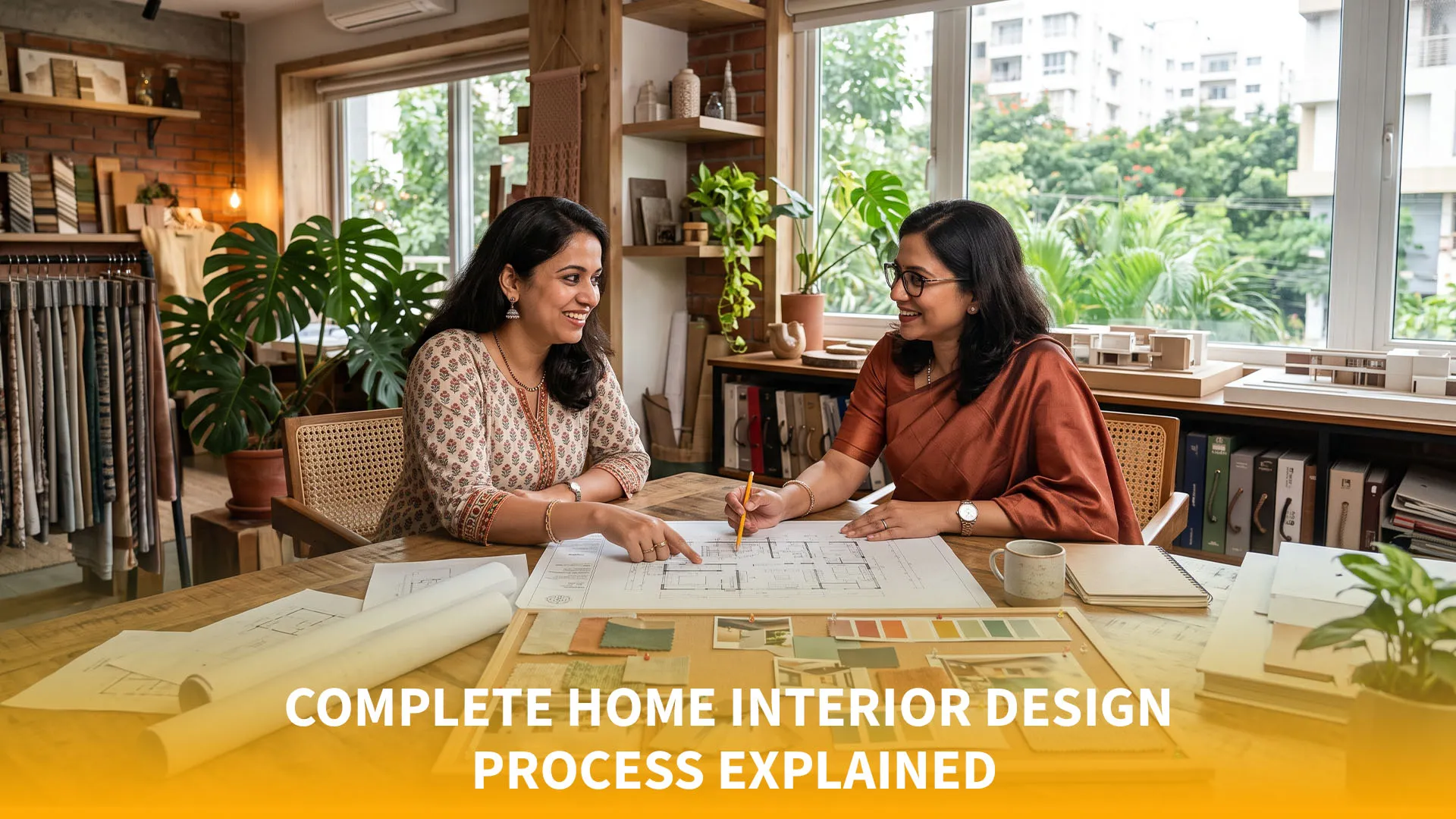
The Home Interior Design Process is a structured journey that transforms your ideas into a beautifully designed and functional living space. It involves careful planning, creative design, material selection, execution, and quality checks to ensure every detail aligns with your lifestyle, preferences, and budget.
Unlike decorating, interior design focuses on improving how your home looks, feels, and functions. A professional process ensures that every room is thoughtfully designed to maximize comfort, storage, aesthetics, and usability.
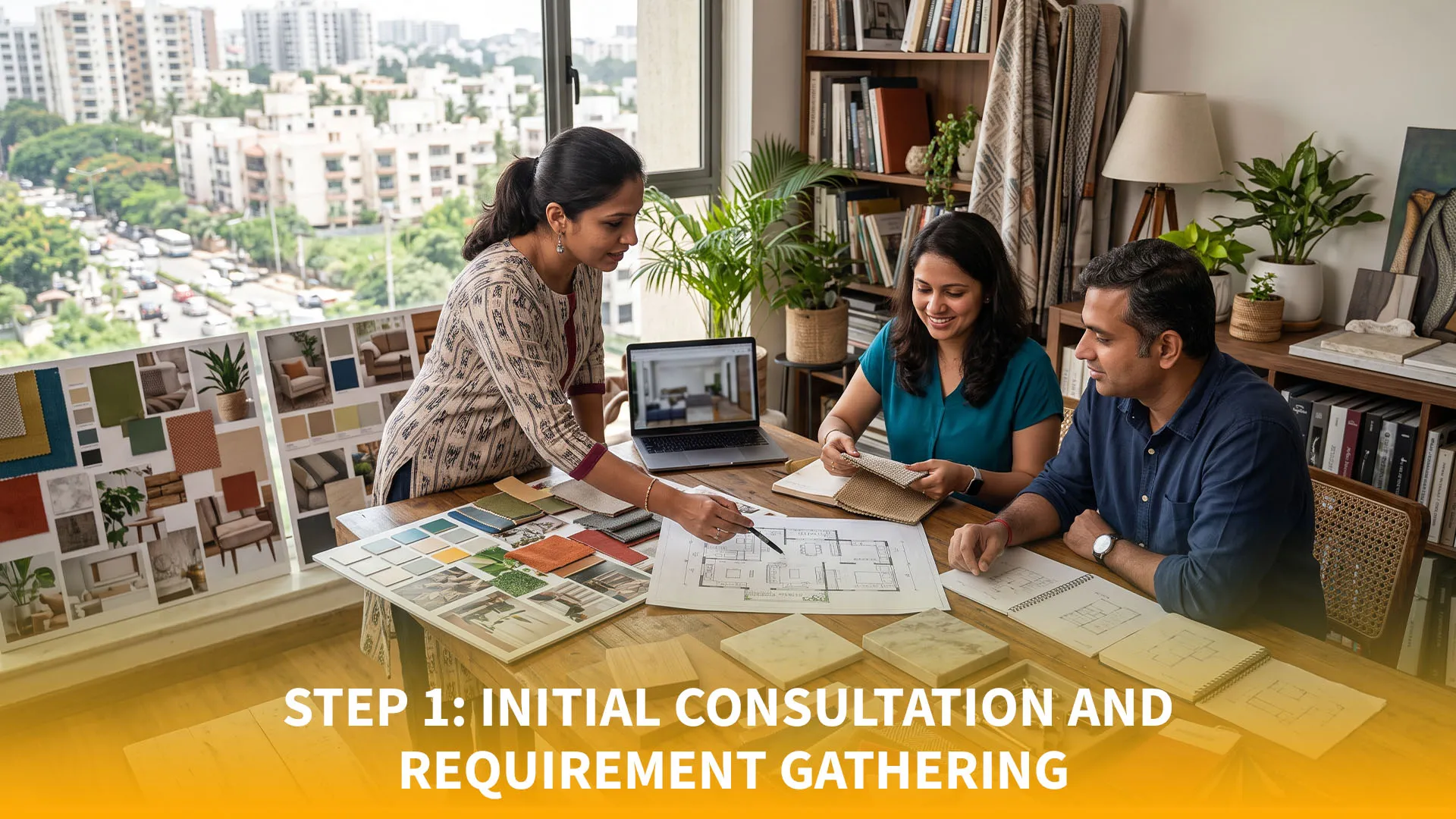
Step 1: Initial Consultation and Requirement Gathering
Every successful Home Interior Design Process begins with understanding you and your home.
During the first meeting, your interior designer will discuss:
Your lifestyle and daily routines
Family requirements
Design preferences
Budget expectations
Project timeline
Space utilization goals
This conversation helps designers understand your vision before creating any concepts.
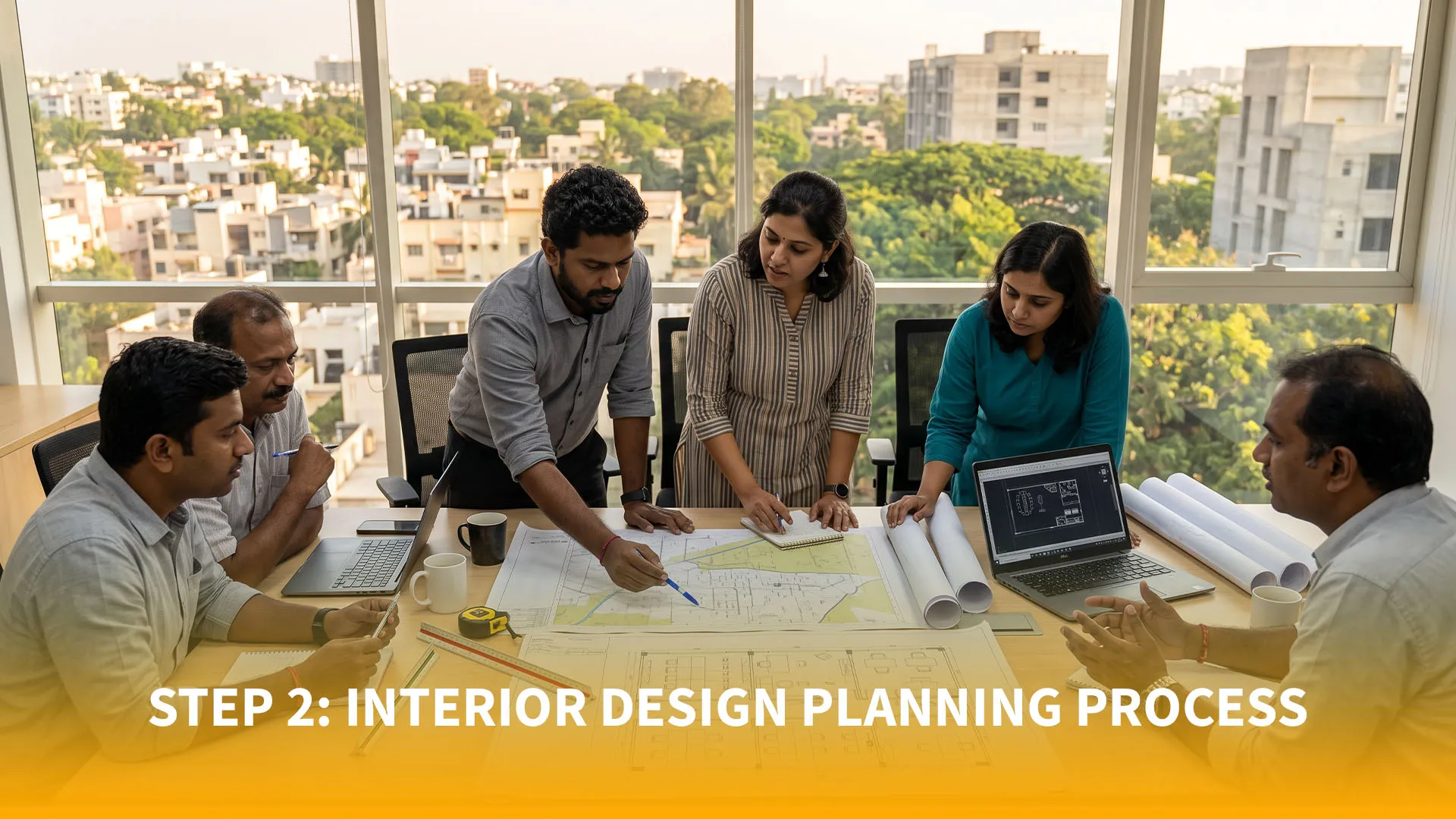
Step 2: Interior Design Planning Process
The Interior design planning process is where your ideas begin taking shape.
At this stage, designers:
Measure your space
Study the floor plan
Analyze natural lighting
Understand ventilation
Plan furniture layouts
Identify storage requirements
A detailed Interior design planning process ensures every inch of your home is utilized efficiently while maintaining visual balance.
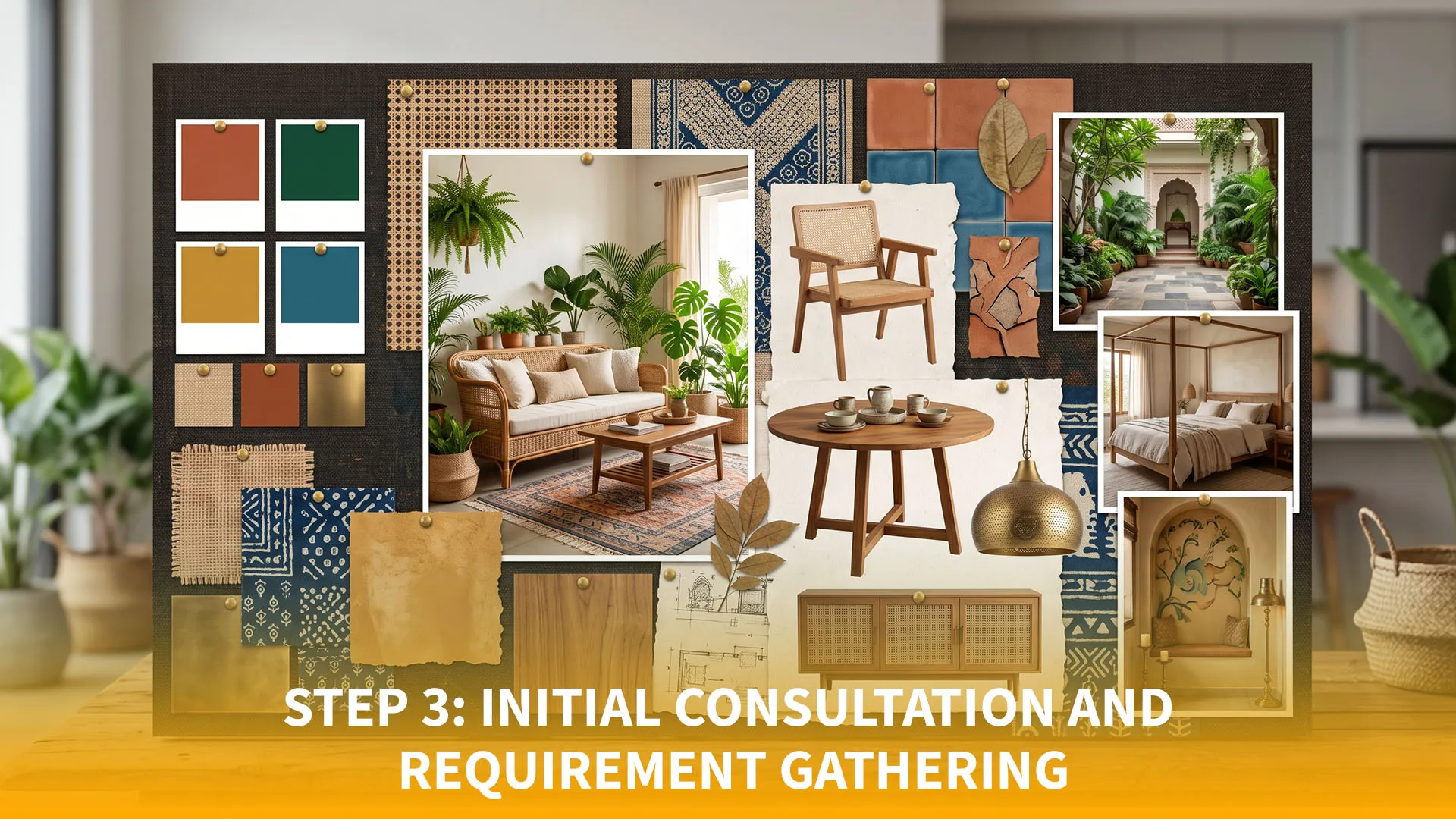
Step 3: Space Planning and Concept Development
Once the planning phase is complete, designers prepare concept layouts based on your preferences.
This stage includes:
Mood boards
Color palettes
Material suggestions
Furniture layouts
Lighting concepts
Theme selection
Whether you prefer modern, contemporary, minimalist, traditional, or luxury interiors, the concept reflects your personality and lifestyle.
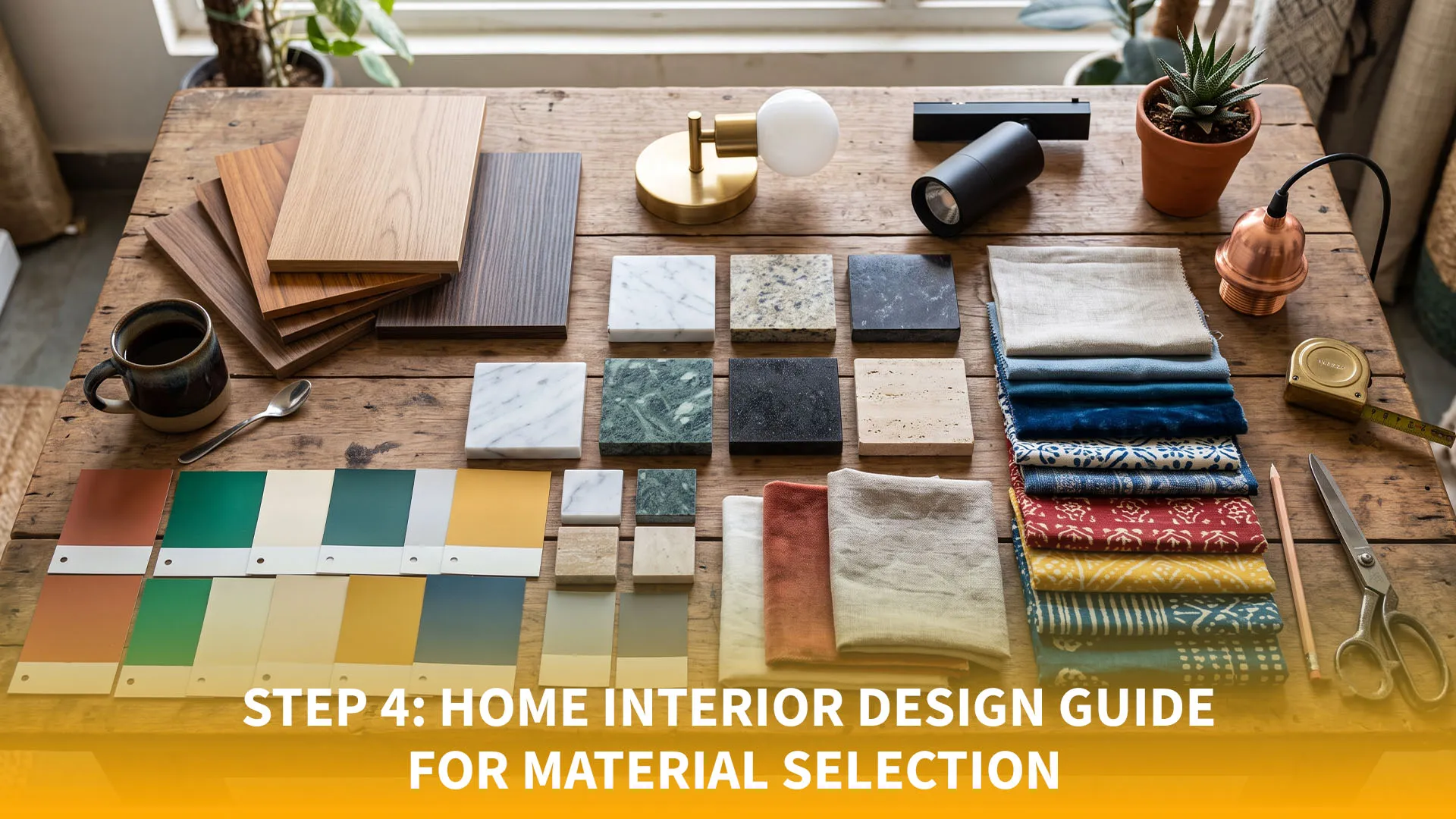
Step 4: Home Interior Design Guide for Material Selection
A practical Home interior design guide helps you choose materials that are both beautiful and durable.
Your designer will assist with selecting:
Flooring
Wall finishes
Laminates
Paint colors
Lighting fixtures
Modular kitchen materials
Wardrobe finishes
Furniture fabrics
Decorative accessories
Following a professional Home interior design guide ensures every material complements your overall design vision.
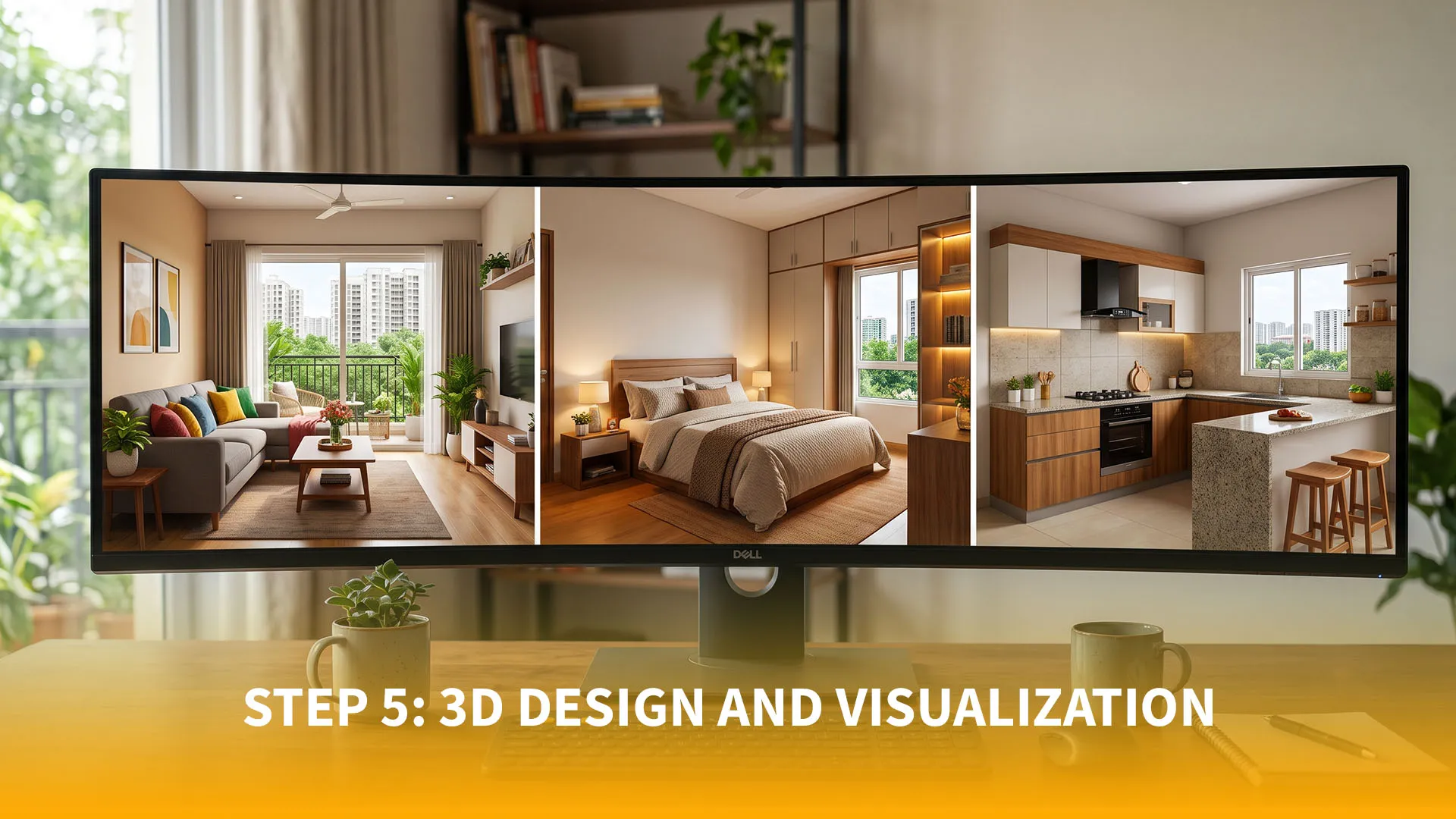
Step 5: 3D Design and Visualization
One of the most exciting parts of the Home Interior Design Process is seeing your future home before construction begins.
Designers create:
3D room views
Kitchen layouts
Bedroom designs
Living room perspectives
Bathroom visualizations
These realistic designs help you understand how every element will look together and allow changes before execution starts.
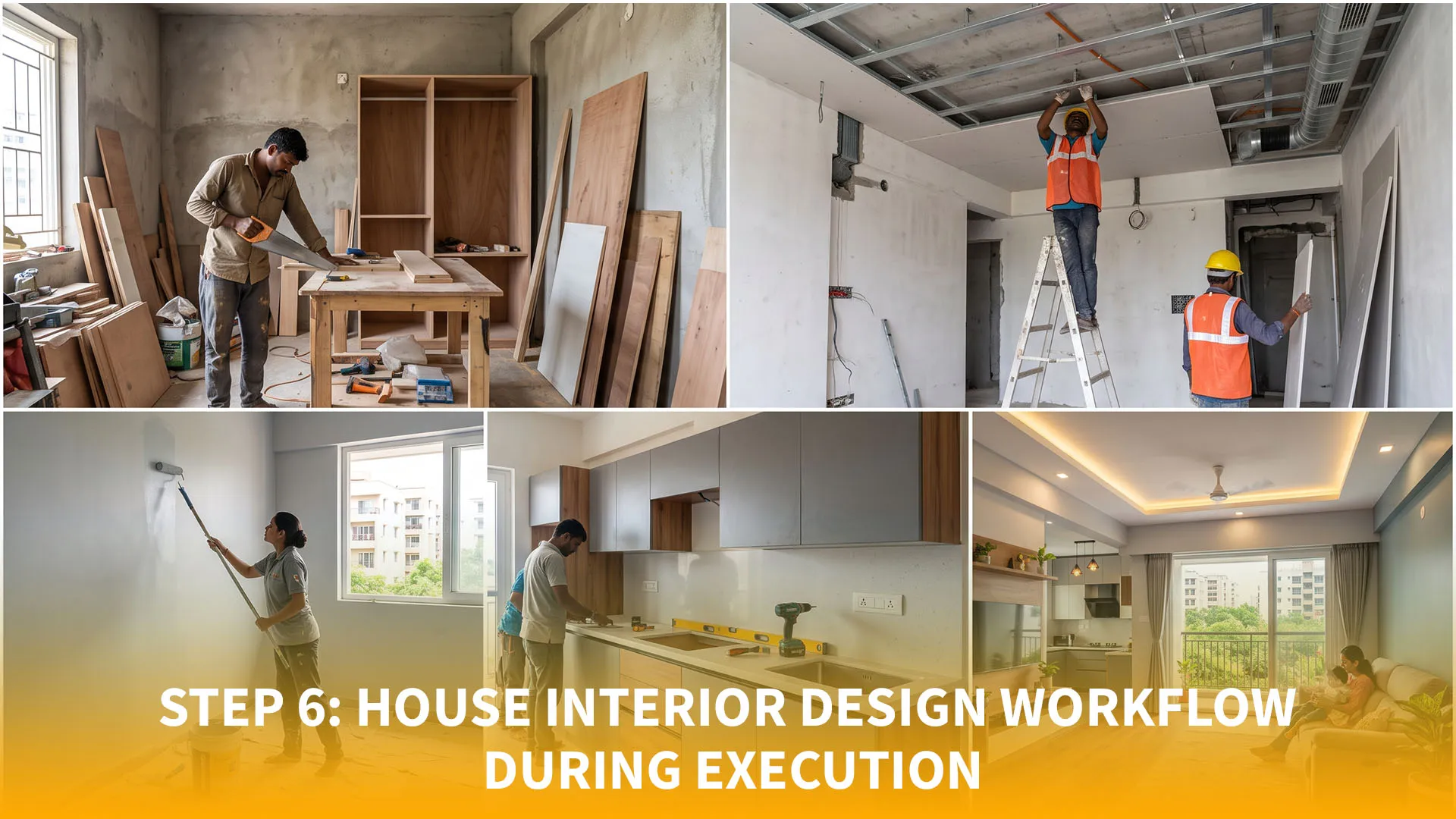
Step 6: House Interior Design Workflow During Execution
The House interior design workflow moves from planning to actual construction and installation.
This stage typically includes:
Civil modifications
Electrical work
Plumbing adjustments
False ceiling installation
Flooring
Carpentry
Modular furniture installation
Painting
Lighting installation
Final styling
A well-managed House interior design workflow keeps the project organized while maintaining quality and timelines.
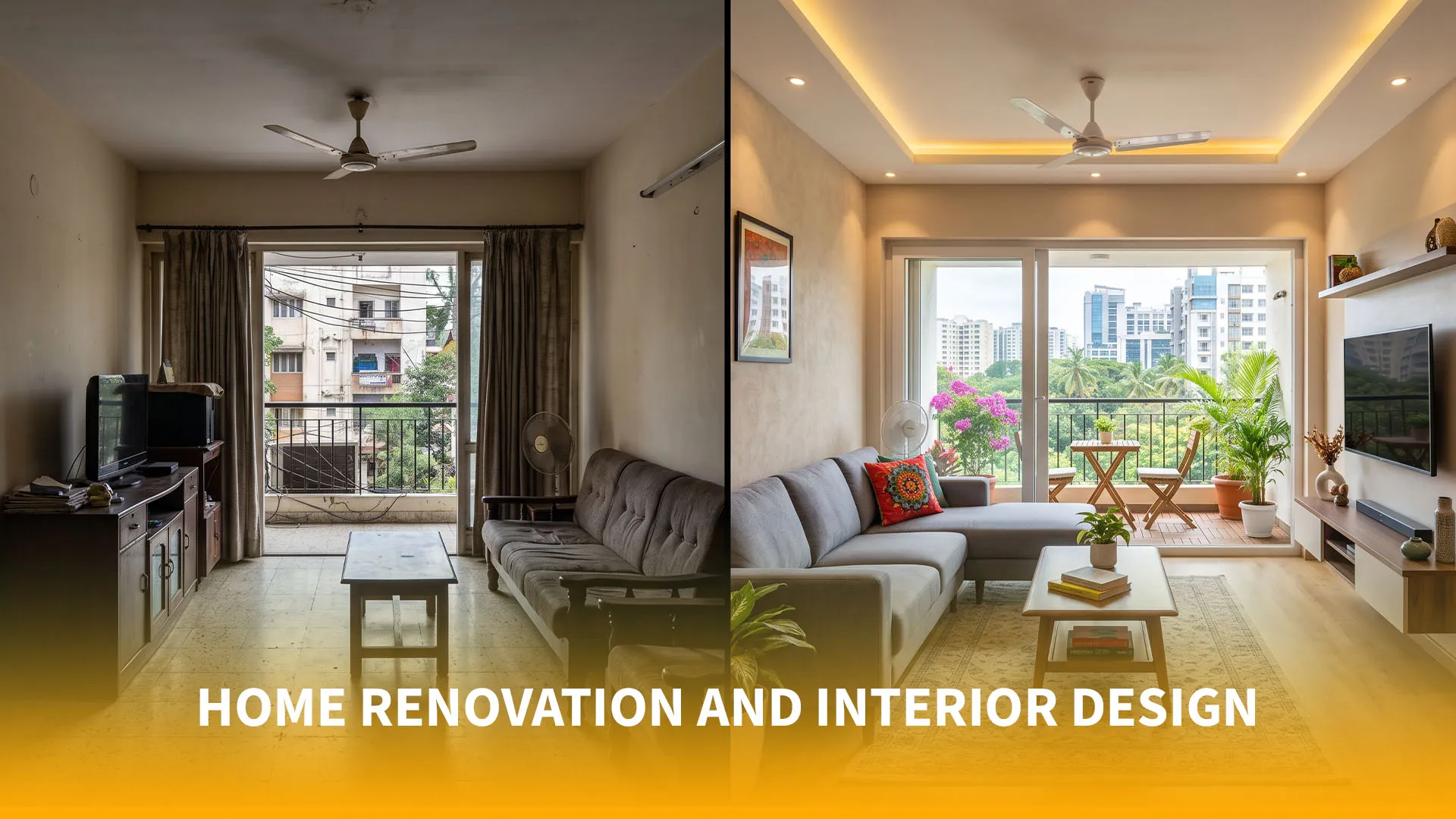
Step 7: Home Renovation and Interior Design
If you’re upgrading an existing home, Home renovation and interior design work together to improve both appearance and functionality.
Renovation may involve:
Remodeling kitchens
Upgrading bathrooms
Improving storage
Replacing flooring
Modernizing lighting
Space optimization
Professional Home renovation and interior design ensures your home feels refreshed without unnecessary structural changes.
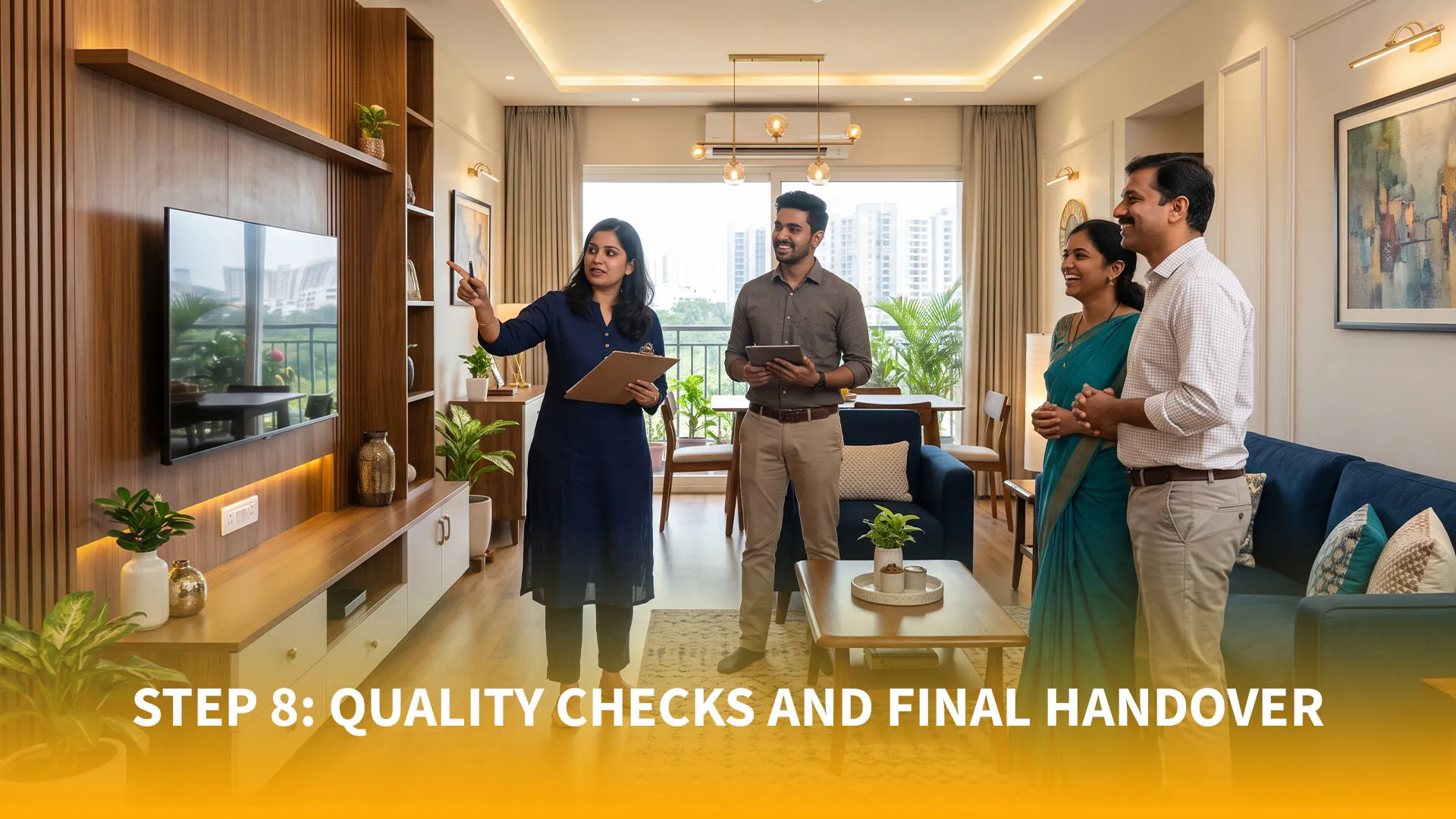
Step 8: Quality Checks and Final Handover
Before project completion, every detail is carefully inspected.
The final review includes:
Furniture alignment
Lighting functionality
Paint finish
Hardware installation
Electrical testing
Cleaning
Client walkthrough
Only after these quality checks is the project handed over, ensuring your new home is ready for everyday living.
Tips to Make Your Interior Design Journey Smooth
To get the best results from your Home Interior Design Process, follow these simple tips:
Define Your Budget Clearly
A realistic budget helps designers recommend suitable materials and solutions without compromising quality.
Share Your Lifestyle Needs
Your home should reflect how you live, work, entertain, and relax.
Trust Professional Expertise
Experienced designers know how to balance aesthetics, functionality, and practicality.
Stay Open to Creative Ideas
Sometimes the best solutions come from expert recommendations you may not have considered.
Communicate Regularly
Frequent discussions help avoid misunderstandings and keep the project aligned with your expectations.

Common Mistakes to Avoid
Many homeowners face challenges because they:
Skip proper planning
Ignore storage requirements
Focus only on appearance
Change designs frequently
Select materials without expert advice
Underestimate project timelines
Avoiding these mistakes makes the Home Interior Design Process more efficient and enjoyable.
Why Hiring Professional Interior Designers Makes a Difference
Professional interior designers bring creativity, technical knowledge, and project management expertise.
They help you:
Maximize available space
Stay within budget
Select quality materials
Avoid costly mistakes
Coordinate vendors
Deliver projects on time
Working with experienced professionals ensures your dream home becomes a reality with minimal stress.

Conclusion
The Home Interior Design Process is much more than choosing furniture and paint colors. It is a carefully planned journey that transforms ideas into functional, beautiful living spaces. From the Interior design planning process and personalized Home interior design guide to the organized House interior design workflow and thoughtful Home renovation and interior design, every stage contributes to creating a home that reflects your lifestyle and personality. When every detail is planned with care, the result is not just a beautiful house but a space where comfort, functionality, and lasting memories come together.
Design Your Dream Home with Dezinepro
At Dezinepro, we believe every home tells a unique story. For over two decades, we have been helping homeowners across Bangalore transform ordinary spaces into beautiful, functional, and personalized interiors. With more than 1,250 successfully completed projects, our experienced team of designers, craftsmen, and project managers delivers end-to-end interior design solutions tailored to your lifestyle, preferences, and budget. Whether you’re designing a compact apartment, a luxury villa, or a commercial space, we combine creativity, practicality, and quality craftsmanship to create interiors that truly feel like home. At Dezinepro, we don’t just design spaces—we create environments where life happens beautifully.
Frequently Asked Questions
The home interior design process typically includes an initial consultation, space planning, concept development, material selection, 3D visualization, project execution, quality inspections, and final handover. Each step ensures your home is functional, visually appealing, and tailored to your lifestyle and budget.
The timeline depends on the size, complexity, and customization of the project. Most residential interior design projects take between 8 and 16 weeks, while larger homes or extensive renovation projects may require additional time for planning, execution, and finishing.
During the first consultation, designers discuss your lifestyle, design preferences, budget, timeline, and functional requirements. They also evaluate the available space, understand your expectations, and gather information needed to develop a personalized interior design plan.
Prepare by defining your budget, collecting design inspiration, listing your functional requirements, identifying storage needs, and sharing your preferred style with your designer. Clear communication during the planning stage helps create a smoother and more successful design experience.
Planning ensures efficient space utilization, realistic budgeting, proper material selection, and smooth project execution. It helps avoid costly mistakes, minimizes delays, and creates a home that balances aesthetics, comfort, and functionality while meeting your long-term lifestyle needs.